Kitchens · 1 min read
Kitchen extraction: grease, filtration and safety
Extraction in a commercial kitchen does more than remove odour. It decides whether grease accumulates in the ductwork, and how hazardous that ductwork becomes over time.
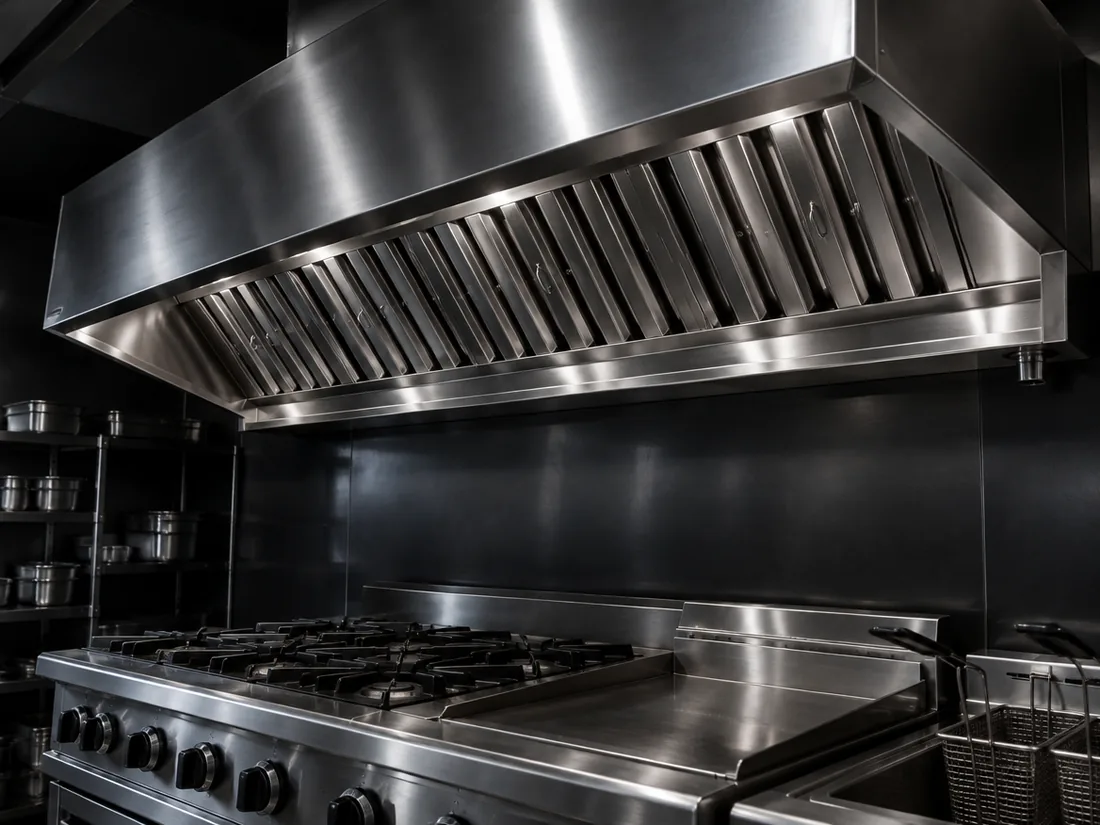
A commercial kitchen extraction system solves two problems at once: it makes the space workable, and it stops grease accumulating where grease is dangerous.
Grease is the real problem
Hot air carries grease particles into the ductwork. If they are not caught on the way, the grease settles on the duct walls. Over time that layer thickens — it reduces throughput and it burns readily.
Grease traps and multi-stage filtration
A baffle-type grease trap turns the air sharply, so grease droplets are thrown onto the metal by their own inertia and run down into a collection gutter. That is the first stage. Further filtration catches finer particles and reduces odour.
What matters is that filters are removable and washable. A filter that is awkward to remove does not, in practice, get cleaned.
What to allow for at the design stage
- The canopy should extend beyond the equipment on each side
- The gutter needs a fall and a collection vessel
- The duct needs access hatches so it can be cleaned
- Air balance: whatever is extracted has to be replaced
Air balance is the commonly missed detail
If air is extracted from a kitchen with no make-up air allowed for, the room goes into negative pressure. Doors become heavy, the canopy works less effectively, and odour migrates into the dining area.
In short
Extraction works when grease is caught where it is easy to remove, and when the extracted air is replaced. Both are decided on the drawing, not afterwards.