Drainage · 1 min read
Storm drainage protects the structure, not just the basement
Water left against a building works on the facade and the foundation. Drainage is not an accessory — it is part of protecting the structure.
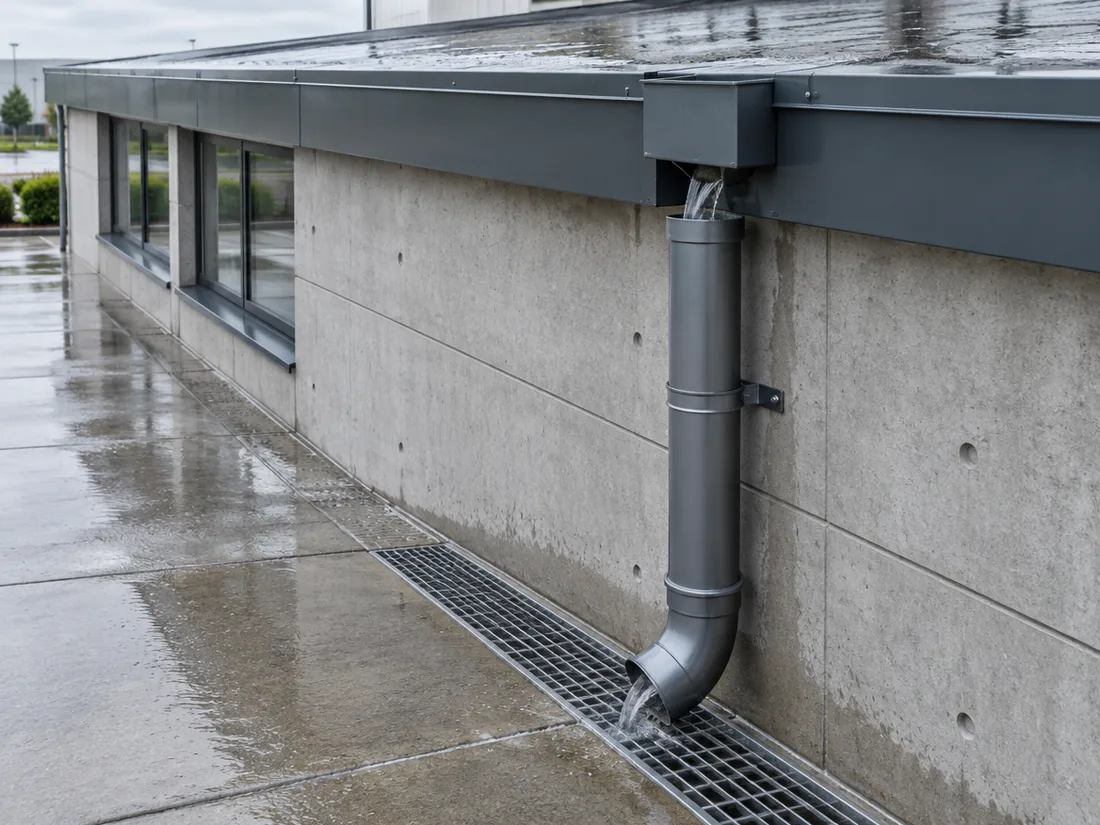
Storm drainage is often treated as a secondary detail. In practice it decides where water goes — and water left against a building always finds a way.
The problem does not start in the basement
Water coming off the roof, if it is not taken away in an organised path, runs down the facade. The result appears gradually: staining, render lifting, damp inside the wall. In winter, freeze-thaw cycling widens microscopic cracks that were already there.
Accumulation around the foundation
If water collects at the base of a building it soaks into the ground and raises the pressure around the foundation. The process is slow, which is exactly what makes it dangerous — the evidence appears when the repair is already expensive.
What determines whether the system works
- Throughput — the cross-section must be sized for heavy rain, not average rain
- Fall — the gutter needs enough fall that water does not stand in it
- Discharge point — the pipe has to take water away from the building, not leave it at the wall
- Cleanability — leaves and debris will collect; the system has to be built so it can be cleared
Made-to-measure is not a luxury
Stock components rarely match real geometry. The mismatch gets filled with sealant and overlaps — which is precisely where the system fails first.
In short
Drainage is cheap while the building is going up, and expensive once the structure has already taken damage.